Apprenticeship Programs in Ontario: A Complete Guide to Starting Your Trades Career
Apprenticeship Programs in Ontario: A Complete Guide to Starting Your Trades Career
If you're considering a career in the skilled trades, an apprenticeship program in Ontario is your pathway to a well-paying, in-demand profession. Ontario's apprenticeship system combines paid on-the-job training with classroom instruction, allowing you to earn while you learn — and graduate with a provincially recognized Certificate of Qualification.
Here's everything you need to know about apprenticeship programs in Ontario's skilled trades.
How Apprenticeships Work in Ontario
Ontario's apprenticeship system is regulated by Skilled Trades Ontario (formerly the Ontario College of Trades). Here's the basic structure:
Most apprenticeships take 3–5 years to complete, depending on the trade.
Trades Offering Apprenticeships in Ontario
Ontario offers apprenticeship programs in over 150 skilled trades. The most popular and in-demand include:
Construction Trades
Industrial Trades
Motive Power and Other
Apprentice Wages in Ontario
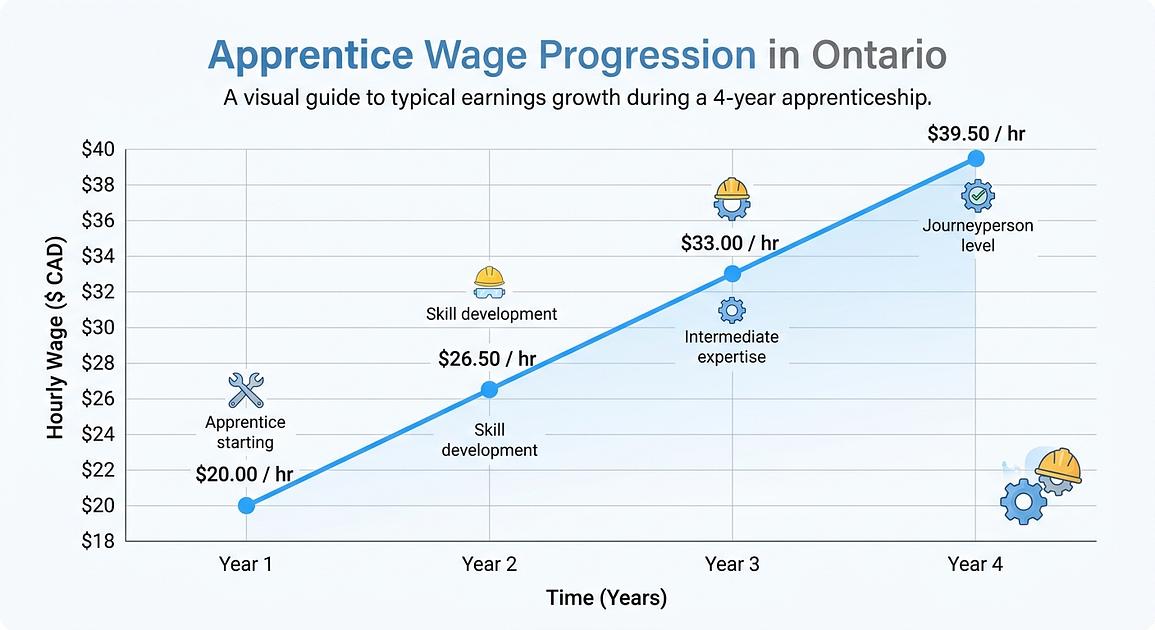
Apprentices are paid for their on-the-job work, with wages typically increasing each year/level:
| Year/Level | Typical Wage (% of journeyperson rate) | Approximate Hourly Rate |
|---|---|---|
| 1st year | 40–50% | $18–$24/hr |
| 2nd year | 50–60% | $22–$28/hr |
| 3rd year | 60–70% | $26–$34/hr |
| 4th year | 70–80% | $30–$40/hr |
Actual wages vary by trade, employer, region, and whether the position is unionized. Union apprenticeships often have standardized wage scales.
Government Incentives for Apprentices in Ontario
The Ontario and federal governments offer financial incentives to encourage apprenticeship participation:
Ontario Incentives
Federal Incentives
Additional Supports
How to Find an Apprenticeship Position in Ontario
1. TradesON Job Board
Browse apprenticeship jobs on TradesON → — Filter by "Apprentice" job type to find positions specifically open to apprentices across Ontario.
2. Skilled Trades Ontario
The provincial body maintains a job bank and resources for finding apprenticeship positions. Register on their portal and search by trade and region.
3. Union Apprenticeship Programs
Many unions (IBEW, UA, LiUNA, Carpenters Union, etc.) operate formal apprenticeship programs with standardized training and guaranteed positions. Contact your local union hall.
4. College Programs
Many Ontario colleges offer pre-apprenticeship programs that combine classroom training with job placement assistance. These can help you make connections with employers.
5. Employer Career Pages
Major contractors often have dedicated apprenticeship programs. Check companies like EllisDon, Modern Niagara, PCL, and Aecon.
6. Job Bank Canada
The federal job board lists apprenticeship positions across Canada, filterable by trade and province.
7. Networking
Let everyone know you're looking for an apprenticeship. Family, friends, suppliers, and community contacts can be valuable sources of leads.
Tips for Landing an Apprenticeship
Red Seal: The National Standard
Many Ontario trades offer Red Seal endorsement, which means your qualification is recognized across Canada. If you're considering working in other provinces at any point, obtaining your Red Seal is highly recommended. It requires passing the Interprovincial (Red Seal) examination in addition to your provincial CQ.
The Bottom Line
An apprenticeship in Ontario's skilled trades is one of the best career investments you can make. You earn while you learn, graduate debt-free (or with minimal debt), and enter a job market with strong demand and excellent earning potential.
Whether you're a recent high school graduate, a career changer, or someone looking for a more hands-on profession, Ontario's apprenticeship system has a path for you.
Related Resources
- Skilled Trades Jobs in Ontario: Your 2026 Guide
- Red Seal Certification in Canada
- How to Find Trades Jobs in Ontario
- Electrician Jobs in Ottawa
Ready to start your apprenticeship? Browse apprenticeship jobs on TradesON →
[Browse apprenticeship jobs on TradesON →](https://tradeson.ca/jobs)
TradesON connects Ontario's aspiring trades professionals with apprenticeship opportunities across the province. We focus exclusively on trades and construction roles.
🔍 Find Jobs Now: Browse our Trades Directory for direct links to open positions, salary guides, and career resources by trade. Also check our trade-specific pages: Electrician Jobs | Plumber Jobs | HVAC Jobs | Carpenter Jobs | Welder Jobs | Construction Jobs