Red Seal Certification in Canada: What It Is, Why It Matters & How to Get It
Red Seal Certification in Canada: What It Is, Why It Matters & How to Get It
If you're a skilled tradesperson in Canada — or aspiring to be one — the Red Seal certification is the most recognized and portable trade credential in the country. It signals to employers across every province and territory that you've met a national standard of excellence in your trade.
Here's everything you need to know about Red Seal certification: what it is, which trades offer it, how to qualify, and why it matters for your career.
What Is Red Seal Certification?
The Red Seal Program is a federal-provincial-territorial partnership that establishes interprovincial standards of excellence for skilled trades. When you earn a Red Seal endorsement on your provincial Certificate of Qualification, it means you've demonstrated competency at a national standard — and your qualification is recognized across Canada.
The program is administered by the Canadian Council of Directors of Apprenticeship (CCDA), which includes representatives from every province and territory, as well as the federal government.
Which Trades Offer Red Seal Endorsement?
As of 2026, the Red Seal Program covers 56 trades across five sectors:
Automotive Sector
Construction Sector
Industrial Sector
Food Services Sector
Other Sectors
The full list is available on the Government of Canada's Red Seal website.
Benefits of Red Seal Certification
1. Interprovincial Mobility
Your qualification is recognized in every province and territory. You can work anywhere in Canada without having to re-certify. This is invaluable if you want to:
2. Higher Earning Potential
Red Seal holders often command higher wages than their non-Red Seal counterparts. Employers recognize the national standard and are willing to pay for it. Many job postings specifically list "Red Seal preferred" or "Red Seal required."
3. Employer Preference
Major contractors — especially those operating in multiple provinces — strongly prefer or require Red Seal certification. It simplifies their compliance and gives them confidence in your skills.
4. Career Advancement
Red Seal is often a prerequisite for:
5. Professional Credibility
Red Seal is the gold standard. It signals to employers, clients, and colleagues that you've met the highest level of trade competency in Canada.
How to Qualify for Red Seal Certification
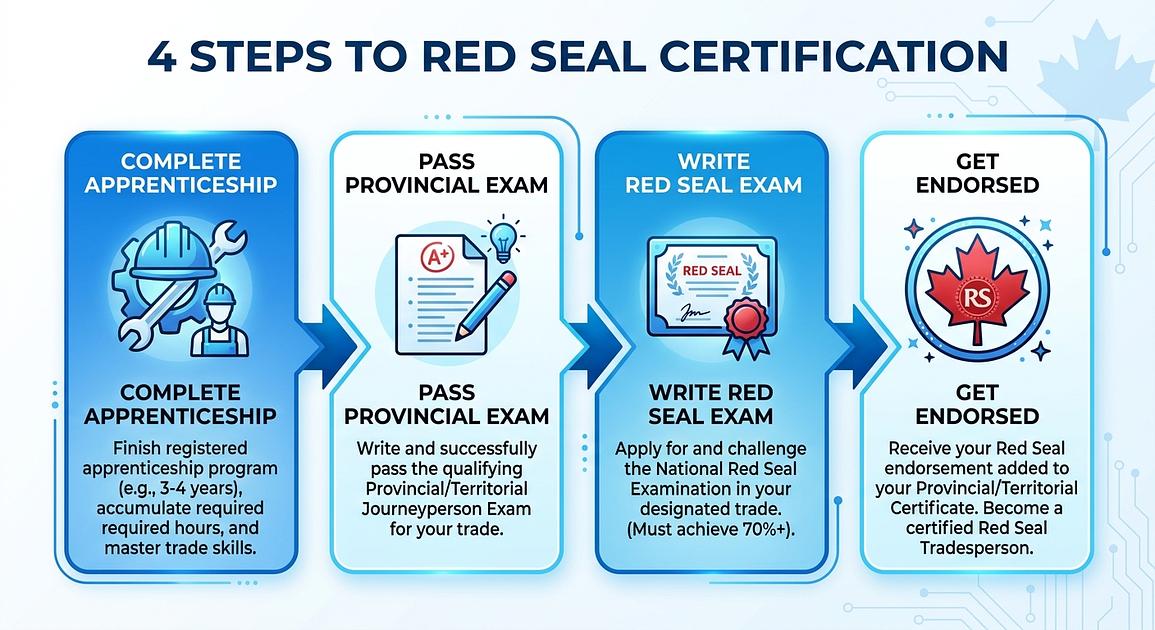
Step 1: Complete Your Provincial Apprenthip or Trade Qualification
You must first be certified in your trade at the provincial level. This typically means:
Step 2: Meet the Challenge (Alternative Path)
If you have significant trade experience but haven't completed a formal apprenticeship, you may be eligible to "challenge" the Red Seal exam directly. Requirements vary by province but typically require:
Step 3: Write the Interprovincial (Red Seal) Examination
The Red Seal exam is a written test that assesses your knowledge and competency against the national standard. Key details:
Step 4: Receive Your Red Seal Endorsement
Once you pass, your province adds the Red Seal endorsement to your Certificate of Qualification. You'll receive a Red Seal certificate and can use the Red Seal logo on your credentials.
Preparing for the Red Seal Exam
Study the Occupational Analysis
Every Red Seal trade has a detailed Occupational Analysis document that outlines the major work activities and sub-tasks covered by the exam. This is your study guide — available free from the Government of Canada website.
Review Your Provincial Training Materials
The knowledge you gained during your apprenticeship in-school training covers much of what's on the exam. Review your textbooks, notes, and study guides.
Take Practice Exams
Many colleges, training providers, and online platforms offer Red Seal practice exams. These help you identify knowledge gaps and get comfortable with the exam format.
Join Study Groups
Many trades communities have study groups — online and in-person — where candidates prepare together. Your union local, college, or trade association may organize these.
Consider a Prep Course
Some colleges and private training providers offer Red Seal preparation courses. These can be valuable if you've been out of school for a while or want structured study support.
Red Seal and the Job Market
On job boards like TradesON, you'll notice that many postings specifically mention Red Seal:
In competitive job markets — or for senior, specialized, or high-paying roles — Red Seal is often the differentiator between candidates.
Red Seal Wage Data
According to Government of Canada labour market data, Red Seal holders tend to earn at the higher end of their trade's wage range:
| Trade | Non-Red Seal Median | Red Seal Median |
|---|---|---|
| Electrician | $38/hr | $44/hr |
| Plumber | $36/hr | $42/hr |
| HVAC Technician | $34/hr | $40/hr |
| Carpenter | $32/hr | $38/hr |
| Welder | $32/hr | $38/hr |
| Millwright | $38/hr | $44/hr |
These are approximate medians; actual wages vary by region, employer, experience, and overtime.
Frequently Asked Questions
Does Red Seal expire?
No. Once earned, your Red Seal endorsement is permanent. However, you must maintain your provincial certification (which may require renewal).
Can I work in another province with just my provincial cert (no Red Seal)?
Maybe. Some provinces have interprovincial agreements that recognize certain provincial certifications without Red Seal. However, Red Seal makes the process seamless and is recognized everywhere.
Is Red Seal the same as a provincial CQ?
No. Your provincial Certificate of Qualification allows you to work in that province. Red Seal is an endorsement added to your CQ that makes it recognized nationally.
Do I need Red Seal to work in my home province?
No. Your provincial certification is sufficient to work in your home province. Red Seal is for portability and career advancement.
Get Red Seal Certified — Then Find Your Next Role
Red Seal certification is one of the best investments you can make in your trades career. It opens doors across Canada, increases your earning potential, and signals your commitment to excellence.
Once you're certified, use TradesON to find roles that value your Red Seal credentials.
Related Resources
- Skilled Trades Jobs in Ontario: Your 2026 Guide
- Apprenticeship Programs in Ontario
- Electrician Jobs in Ottawa
- Welding Jobs in Ontario
Find Red Seal jobs across Ontario. Browse skilled trades jobs on TradesON →
[Browse Red Seal jobs on TradesON →](https://tradeson.ca/jobs)
TradesON connects Canada's certified trades professionals with employers who value their expertise. We focus exclusively on skilled trades and construction roles.
🔍 Find Jobs Now: Browse our Trades Directory for direct links to open positions, salary guides, and career resources by trade. Also check our trade-specific pages: Electrician Jobs | Plumber Jobs | HVAC Jobs | Carpenter Jobs | Welder Jobs | Construction Jobs