How to Find Trades Jobs in Ontario: 10 Strategies That Actually Work in 2026
How to Find Trades Jobs in Ontario: 10 Strategies That Actually Work in 2026
Finding the right trades job in Ontario shouldn't mean scrolling through hundreds of irrelevant listings on general job sites. The skilled trades have unique hiring dynamics — referrals matter, certifications are non-negotiable, and specialized job boards outperform generic ones every time.
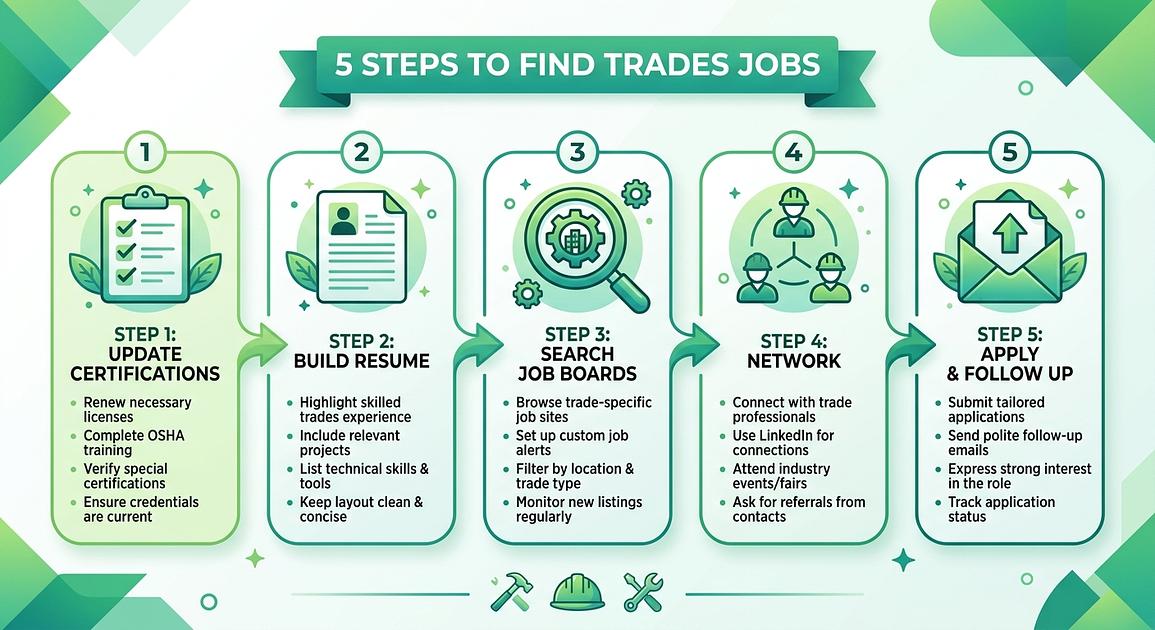
Whether you're an electrician, plumber, HVAC tech, carpenter, welder, or any other trades professional, here are 10 strategies that actually work for finding trades jobs in Ontario in 2026.
1. Use a Trades-Specific Job Board
This is the single most effective thing you can do. General job sites like Indeed and Monster have thousands of listings — but most of them aren't relevant to you. You'll wade through office jobs, retail positions, and tech roles to find the few trades listings buried in the results.
A specialized trades job board like TradesON filters out the noise. Every listing is a trades or construction role. You can filter by:
Result: You spend less time searching and more time applying to relevant roles.
2. Get Your Referrals Working
Trades hiring is heavily referral-based. Many of the best jobs never get posted publicly — they're filled through word of mouth. Here's how to tap into that network:
3. Register with Your Union Hiring Hall
If you're unionized — or considering unionizing — your local hiring hall is one of the most powerful job search tools available:
Union halls maintain relationships with contractors and dispatch members to available positions. Being in good standing with your local gives you access to jobs that aren't posted publicly.
4. Check Employer Career Pages Directly
Major Ontario contractors post positions on their own career pages. If you know the companies you want to work for, check their sites regularly:
Set up Google Alerts for "[company name] careers" to get notified when new positions are posted.
5. Keep Your Certifications Current
This isn't a job search strategy per se — but it's the #1 reason tradespeople get rejected. Before applying anywhere, make sure:
Employers will verify your certifications. An expired ticket is an instant disqualification — even if you're otherwise perfect for the role.
6. Optimize Your Trades Resume
Your resume should be built for the trades, not for corporate roles. Key elements:
7. Be Flexible on Location and Schedule
The more flexible you are, the more opportunities you'll find:
8. Leverage Government and Apprenticeship Resources
If you're an apprentice or recently certified, take advantage of government resources:
9. Prepare for Trades Interviews
Trades interviews are typically shorter and more practical than corporate interviews — but they still require preparation:
10. Set Up Job Alerts and Check Daily
The best trades jobs get filled quickly. To stay ahead:
Bonus: Create a TradesON Profile
If you haven't already, create a job seeker profile on TradesON. This allows employers to find you — reversing the job search dynamic. Upload your resume, set your preferences, and let opportunities come to you.
Start Your Search Today
Finding trades jobs in Ontario doesn't have to be frustrating. Use these 10 strategies — especially the trades-specific job board and networking — and you'll find relevant opportunities faster.
Related Resources
- Skilled Trades Jobs in Ontario: Your 2026 Guide
- Electrician Jobs in Ottawa
- HVAC Technician Jobs in Ontario
- Plumber Jobs in Ontario
- Welding Jobs in Ontario
- Carpentry Jobs in Ottawa
Start applying today. Browse all trades jobs on TradesON →
[Browse trades jobs on TradesON →](https://tradeson.ca/jobs)
TradesON is Ontario's dedicated skilled trades and construction job board. We focus exclusively on trades roles so you can find your next opportunity without the noise.
🔍 Find Jobs Now: Browse our Trades Directory for direct links to open positions, salary guides, and career resources by trade. Also check our trade-specific pages: Electrician Jobs | Plumber Jobs | HVAC Jobs | Carpenter Jobs | Welder Jobs | Construction Jobs