Construction Jobs in Canada 2026: Market Outlook, Top Trades & Where to Apply
Construction Jobs in Canada 2026: Market Outlook, Top Trades & Where to Apply
Canada's construction industry is entering one of its strongest periods in decades. With trillions of dollars committed to infrastructure, housing, energy transition, and industrial projects, construction jobs in Canada are abundant across every province and trade in 2026.
Here's your comprehensive guide to the current market — what's driving demand, which trades are hiring most aggressively, what you can expect to earn, and where to find the best opportunities.
The Big Picture: Canada's Construction Boom
Canada's construction sector is being propelled by several overlapping megatrends:
Housing Construction
The federal government's Housing Accelerator Fund and provincial targets (Ontario's 1.5 million homes by 2031, BC's housing initiatives) are driving massive residential construction activity. Every new home needs framers, electricians, plumbers, HVAC technicians, drywallers, roofers, and finish carpenters.
Infrastructure Investment
The federal Infrastructure Bank, provincial transit authorities, and municipal governments are investing in:
Energy Transition
Canada's net-zero commitments are creating construction demand in:
Industrial Construction
Data centres, battery manufacturing plants, LNG facilities, and mining expansions are driving industrial construction demand, particularly in Alberta, Ontario, Quebec, and BC.
Top-Demand Construction Trades in Canada (2026)
Based on job posting data, government labour market reports, and industry surveys:
Salary Ranges by Trade (Canada-Wide, 2026)
| Trade | Entry-Level | Mid-Career | Senior/Journeyperson |
|---|---|---|---|
| Electrician | $24–$30/hr | $34–$44/hr | $46–$58/hr |
| Carpenter | $22–$28/hr | $30–$40/hr | $42–$54/hr |
| Plumber | $24–$30/hr | $33–$44/hr | $46–$58/hr |
| HVAC Technician | $22–$30/hr | $32–$42/hr | $44–$56/hr |
| Welder | $22–$30/hr | $32–$42/hr | $44–$58/hr |
| Heavy Equipment Operator | $24–$32/hr | $34–$44/hr | $46–$56/hr |
| Ironworker | $24–$32/hr | $35–$46/hr | $48–$60/hr |
| Sheet Metal Worker | $22–$28/hr | $30–$40/hr | $42–$54/hr |
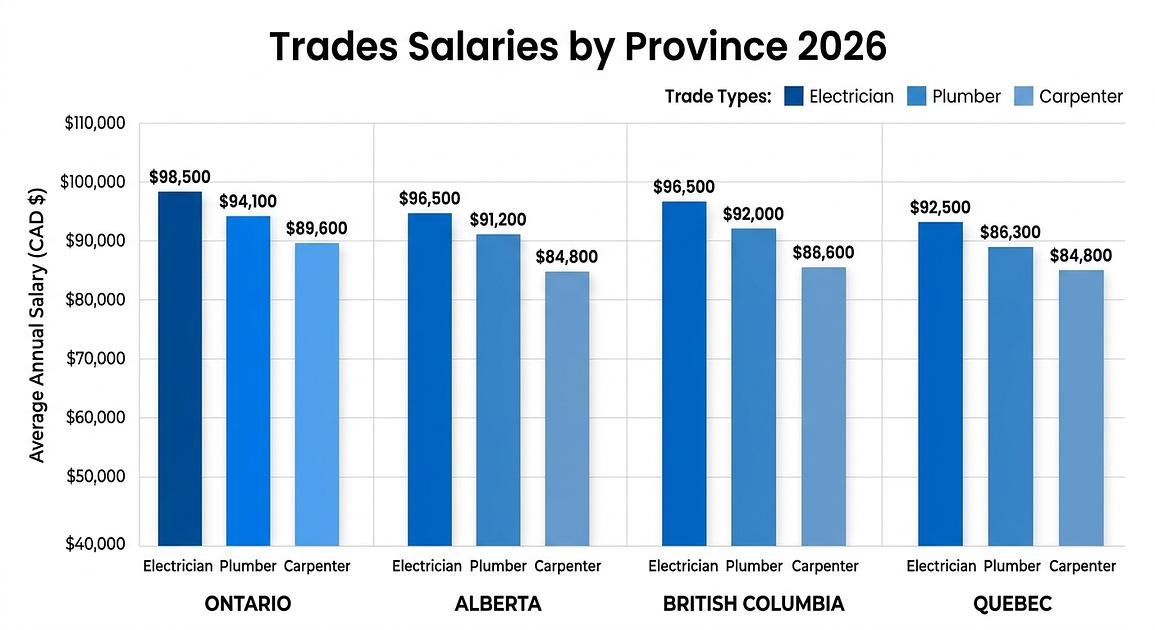
Alberta and Ontario tend to pay at the higher end; Atlantic Canada and some rural areas may be lower. Northern and remote projects often include premium pay and camp allowances.
Regional Highlights
Ontario
The largest construction market in Canada. Major projects include transit expansion (Ontario Line, LRT in Ottawa and Hamilton), housing development across the GTA and other urban centres, and industrial construction (battery plants in the southwest). Strong demand across all trades.
Alberta
Energy sector construction remains strong, with diversification into petrochemical, hydrogen, and renewable projects. Calgary and Edmonton are experiencing significant commercial and residential construction. Competitive wages, particularly for industrial trades.
British Columbia
LNG Canada, Site C Dam, transit expansion (Broadway Subway, Surrey-Langley), and massive housing construction in Metro Vancouver drive demand. High cost of living is partially offset by strong wages.
Quebec
Major infrastructure programs including REM light rail, hospital construction, and hydroelectric projects. French language skills are important for most roles.
Atlantic Canada
Growing construction activity driven by housing, wind energy projects, and shipbuilding (National Shipbuilding Strategy). Emerging market with lower competition.
How to Find Construction Jobs in Canada
Tips for Construction Job Seekers in 2026
The Bottom Line
2026 is an exceptional year for construction jobs in Canada. The combination of housing targets, infrastructure spending, energy transition, and industrial development means sustained demand across virtually every trade and every region.
If you're in the trades — or considering entering them — the opportunities are there. The key is positioning yourself with the right certifications, targeting the right markets, and using the right job search tools.
Related Resources
- Skilled Trades Jobs in Ontario: Your 2026 Guide
- Electrician Jobs in Ottawa
- Carpentry Jobs in Ottawa
- Welding Jobs in Ontario
- How to Find Trades Jobs in Ontario
Start your construction job search today. Browse construction jobs on TradesON →
[Browse construction jobs on TradesON →](https://tradeson.ca/jobs)
TradesON connects Canada's construction and trades professionals with the employers who need them. We focus exclusively on skilled trades and construction roles.
🔍 Find Jobs Now: Browse our Trades Directory for direct links to open positions, salary guides, and career resources by trade. Also check our trade-specific pages: Electrician Jobs | Plumber Jobs | HVAC Jobs | Carpenter Jobs | Welder Jobs | Construction Jobs