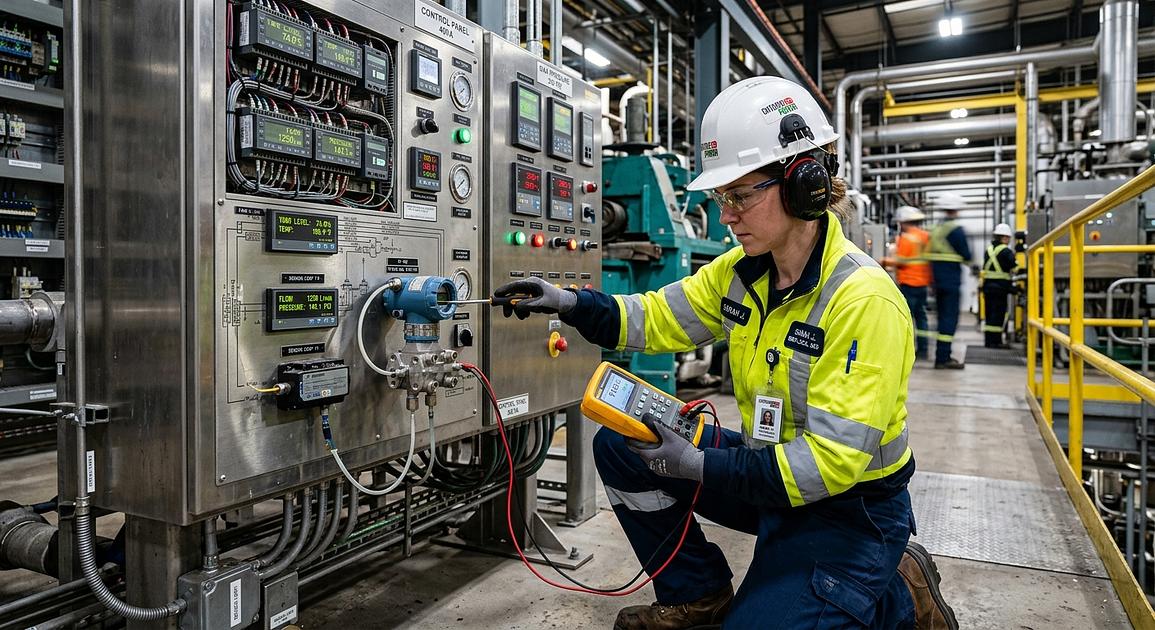
Instrumentation Technician Jobs Ontario 2026: Salary, Certification & Career Guide
Instrumentation Technician Jobs Ontario 2026: Salary, Certification & Career Guide
Why Instrumentation Technician Is One of Ontario's Hottest Skilled Trades in 2026
Ontario's manufacturing, energy, mining, and pharmaceutical sectors rely on instrumentation technicians to keep process control systems running safely and efficiently. As plants across the Greater Toronto Area, Ottawa, Hamilton, Sarnia, and Northern Ontario upgrade to smart manufacturing and Industry 4.0 technologies, demand for skilled instrumentation technician jobs in Ontario has reached record levels heading into 2026.
Whether you're a newly certified 442A Instrumentation & Control Electrician or an experienced process control technician looking for a lead role, this guide covers everything you need to know about salaries, certification paths, training programs, and the top employers hiring right now.
Instrumentation Technician Salary in Ontario (2026)
Salaries for instrumentation technicians in Ontario vary by experience, sector, and location. The data below reflects 2026 market rates across the province, with higher compensation in oil & gas, mining, and pharmaceutical hubs.
| Experience Level | Annual Salary | Hourly Rate | Typical Roles |
|---|---|---|---|
| Entry-Level (0–2 years) | $60,000 | $28–$32/hr | Junior Instrument Tech, Apprentice |
| Mid-Level (3–5 years) | $75,000 | $35–$40/hr | Instrumentation Technician, Process Control Tech |
| Senior (6–10 years) | $90,000 | $42–$48/hr | Senior Instrument Tech, Automation Specialist |
| Lead / Supervisor (10+ years) | $100,000+ | $50–$58/hr | Lead Instrument Tech, Controls Supervisor |
Location premiums: Instrumentation techs in Sarnia's petrochemical corridor and Northern Ontario mining operations often earn 10–20% above the provincial average. Ottawa and Toronto roles tend to cluster around the mid-level range but offer strong benefits packages. For a broader view of what Ontario's skilled trades pay, see our Skilled Trades Salaries in Ontario 2026 guide.
Certification Requirements for Instrumentation Technicians in Ontario
442A Instrumentation & Control Electrician Certificate
The 442A certification is Ontario's primary credential for instrumentation technicians. Administered through Skilled Trades Ontario, the 442A program covers:
- Process measurement (pressure, temperature, flow, level)
- Control loop calibration and configuration
- PLC and DCS programming fundamentals
- Industrial networking (HART, Foundation Fieldbus, Profibus)
- Safety instrumented systems (SIS) and SIL compliance
Apprenticeship typically requires 9,000 hours of on-the-job training plus three 8-week in-school technical training blocks. A full breakdown of Ontario's certification landscape is available in our Trades Certifications Ontario Complete Guide.
Red Seal Endorsement
While Instrumentation & Control Electrician is not currently a designated Red Seal trade, many instrumentation techs pursue the Red Seal certification in a related trade (such as Electrician – Industrial or Millwright) to improve interprovincial mobility. The Red Seal endorsement is recognized in every Canadian province and territory.
ISA Certification (Optional but Valued)
The International Society of Automation (ISA) offers the Certified Control Systems Technician (CCST) credential, which is increasingly requested by employers in pharmaceutical and food & beverage manufacturing. ISA certifications demonstrate competency in calibration, loop checking, and PLC troubleshooting.
Top Instrumentation Technician Training Programs in Ontario
Ontario's colleges and apprenticeship providers offer excellent pathways into industrial instrumentation careers:
- Algonquin College (Ottawa) — Electronics Techniques – Automation program with co-op placements in Ottawa's tech and government sectors.
- Centennial College (Toronto) — Instrumentation Technician diploma with hands-on labs in process control and PLC programming.
- Georgian College (Barrie) — Electrical Techniques – Industrial program with 442A apprenticeship prep.
- Lambton College (Sarnia) — Instrumentation & Control Electrician program located in Ontario's petrochemical heartland.
- St. Clair College (Windsor) — Automation & Instrumentation program serving Southwest Ontario's manufacturing corridor.
Looking for a broader list of pathways? Our Ontario Trades Apprenticeship Programs 2026 guide covers every skilled trades program in the province.
Instrumentation Technician Job Market Outlook for 2026
Ontario's instrumentation technician job market is projected to grow 8–12% through 2026, driven by several factors:
- Industry 4.0 adoption: Smart factories require instrumentation techs to install, maintain, and troubleshoot IIoT sensors, smart transmitters, and edge computing devices.
- Energy transition: Ontario's nuclear refurbishment (Darlington, Bruce) and hydrogen projects need instrumentation specialists for process control systems.
- Pharmaceutical expansion: Mississauga and Toronto's pharma corridor continues to grow, with GMP-regulated environments demanding precise calibration expertise.
- Mining automation: Northern Ontario's Ring of Fire and existing operations in Sudbury and Timmins are automating process plants, creating demand for remote instrumentation and control expertise.
- Retirement wave: A significant portion of the current instrumentation workforce is approaching retirement, creating openings for new entrants.
Instrumentation technicians often work alongside millwrights and industrial maintenance technicians and licensed electricians on large-scale projects, making cross-trade collaboration a valuable career skill.
Top Employers Hiring Instrumentation Technicians in Ontario (2026)
These companies and sectors are actively recruiting instrumentation techs across Ontario:
- Ontario Power Generation (OPG) — Nuclear and hydroelectric facilities across the province.
- Imperial Oil / Sarnia Refinery — Petrochemical instrumentation and control systems.
- Bombardier Aerospace (Toronto) — Avionics and manufacturing process instrumentation.
- Sanofi / Pfizer (Toronto/Mississauga) — Pharmaceutical process control and GMP calibration.
- Vale (Sudbury) — Mining process instrumentation and automation.
- Magna International — Automotive manufacturing automation and robotics instrumentation.
- Hatch / Stantec — Engineering consultancies deploying instrumentation techs on client sites.
- City of Ottawa / Government of Canada — Facilities instrumentation for federal buildings and research labs.
How to Land Your First Instrumentation Technician Job in Ontario
- Complete your 442A apprenticeship or an equivalent college diploma in instrumentation/automation.
- Get ISA CCST certified to stand out in competitive markets like Toronto and Ottawa.
- Build PLC skills — proficiency in Allen-Bradley (Rockwell) and Siemens platforms is essential.
- Gain co-op or apprentice hours in a process environment (food & beverage, pharma, energy, or mining).
- Network through Skilled Trades Ontario events and local ISA chapters.
- Search instrumentation technician jobs on Job Boardly to find current openings across Ontario.
Frequently Asked Questions
What is the average salary for an instrumentation technician in Ontario?
The average instrumentation technician salary in Ontario for 2026 is $75,000 per year, or approximately $38/hour. Entry-level positions start around $60,000, while senior and lead roles can exceed $100,000, especially in petrochemical, mining, and nuclear sectors.
Is 442A certification required to work as an instrumentation technician in Ontario?
The 442A Instrumentation & Control Electrician certificate is the primary credential for instrumentation technicians in Ontario. While some employers accept related electrical or automation diplomas for entry-level roles, holding your 442A significantly improves job prospects and earning potential.
What is the difference between an instrumentation technician and a process control technician?
The titles are often used interchangeably in Ontario. An instrumentation technician focuses on field instruments (transmitters, control valves, analyzers), while a process control technician typically works more with DCS/PLC systems in the control room. Many professionals do both, and employers often post under both titles.
Where are the most instrumentation technician jobs in Ontario?
The highest concentration of instrumentation technician jobs in Ontario is in Sarnia (petrochemical), Toronto/Mississauga (pharmaceutical and manufacturing), Sudbury/Timmins (mining), and the Greater Toronto Area (nuclear, food processing, and automation). Ottawa also offers opportunities in government facilities and tech-sector manufacturing.
Can instrumentation technicians work in other Canadian provinces?
Yes. While Ontario's 442A is province-specific, instrumentation technicians can pursue Red Seal endorsement or apply for trade recognition in other provinces. Alberta's energy sector and Saskatchewan's mining industry are popular destinations for Ontario-trained instrumentation techs seeking higher wages.
Browse Instrumentation Technician Jobs in Ontario
Ready to take the next step in your instrumentation career? Browse the latest instrumentation technician jobs in Ontario on Job Boardly and apply today. New positions are posted daily across manufacturing, energy, mining, and pharmaceutical sectors.