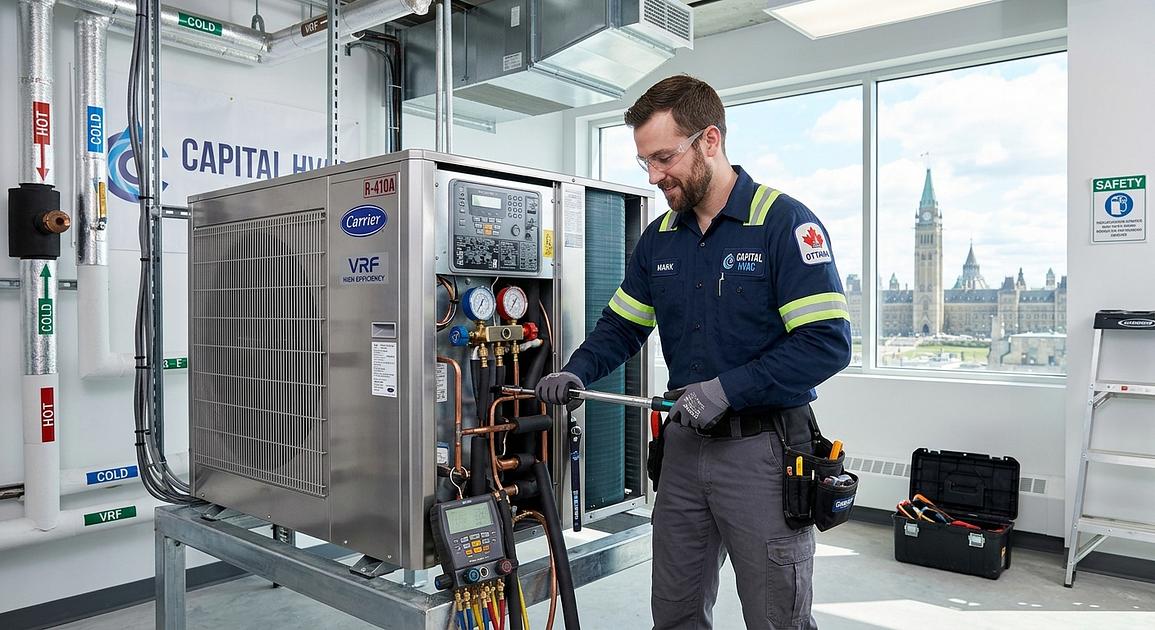
HVAC Jobs Ottawa: Heating & Cooling Careers Guide 2026
HVAC (Heating, Ventilation, and Air Conditioning) technicians are in high demand across Ottawa. The city's extreme climate — from -30°C winters to +35°C summers — makes HVAC expertise essential year-round. With the green energy transition and new building efficiency standards, 2026 is an excellent time to enter or advance in this field.
Ottawa HVAC Job Market Overview
Ottawa's HVAC sector is growing rapidly due to several converging factors:
- Climate Demands: Extreme temperature swings require robust heating and cooling systems
- Energy Efficiency Standards: New building codes require high-efficiency HVAC systems
- Heat Pump Adoption: Federal and provincial incentives driving heat pump installations
- Commercial Construction: Office and retail developments requiring complex HVAC systems
- System Upgrades: Aging equipment replacement in existing buildings
Types of HVAC Roles in Ottawa
Installation Technician
Installation technicians install new HVAC systems in residential and commercial buildings. They read blueprints, size equipment, and ensure proper installation. Average salary: $52,000-$75,000.
Service Technician
Service technicians diagnose and repair existing HVAC systems. This role requires strong troubleshooting skills and often includes on-call duties. Average salary: $55,000-$82,000.
Maintenance Technician
Maintenance technicians perform regular inspections, cleaning, and tune-ups to keep systems running efficiently. This role offers steady, predictable work. Average salary: $50,000-$72,000.
Refrigeration Technician
Refrigeration technicians specialize in commercial refrigeration systems for grocery stores, restaurants, and industrial facilities. Average salary: $58,000-$88,000.
Controls Technician
Controls technicians install and program building automation systems, managing complex HVAC networks in large commercial buildings. Average salary: $62,000-$88,000.
Salary Ranges & Benefits
| Experience Level | Hourly Rate | Annual Salary |
|---|---|---|
| Apprentice (Year 1) | $18-$22 | $37,000-$45,000 |
| Apprentice (Year 4) | $27-$33 | $56,000-$68,000 |
| Journeyperson (313A) | $31-$40 | $64,000-$83,000 |
| Refrigeration Mechanic (313A) | $33-$42 | $68,000-$87,000 |
| Specialized (Controls/Commercial) | $38-$50 | $79,000-$104,000 |
Certification Requirements (G2, G1, 313A)
HVAC technicians in Ontario need specific certifications depending on their specialization:
G2 Gas Technician
The G2 license allows you to work on gas appliances up to 400,000 BTU. This is the entry-level gas certification and is required for most residential HVAC work.
G1 Gas Technician
The G1 license removes the BTU restriction, allowing you to work on any gas appliance. This is required for commercial and industrial HVAC work.
313A Refrigeration and Air Conditioning Mechanic
The 313A Certificate of Qualification is the primary certification for HVAC technicians in Ontario. It covers installation, maintenance, and repair of refrigeration and air conditioning systems.
Additional Certifications
- ODP Card: Ozone Depletion Prevention card for handling refrigerants
- Working at Heights: Required for rooftop HVAC work
- Electrical Safety: Basic electrical certification for HVAC work
- Manufacturer Certifications: Brand-specific training (Carrier, Trane, Lennox, etc.)
Apprenticeship Pathway
The HVAC apprenticeship in Ontario is a 5-year program:
- On-the-Job Training: 9,000 hours over 5 years
- In-School Training: Three 8-week sessions at an approved college
- Wage Progression: Start at 40-50% of journeyperson rate
Top HVAC Employers in Ottawa
- Capital HVAC: Large residential and commercial HVAC contractor
- Ottawa Heating & Cooling: Full-service HVAC company
- Reliance Home Comfort: Major HVAC equipment and service provider
- Carrier Ottawa: Manufacturer-authorized dealer and service
- Federal Government: Public Works HVAC maintenance positions
- Hospital Authority: The Ottawa Hospital HVAC maintenance
Union Opportunities
HVAC technicians in Ottawa can join the United Association (UA) Local 502, which represents pipefitters, plumbers, and HVAC technicians. Union benefits include competitive wages, comprehensive benefits, and pension plans.
Career Specialization Paths
- Commercial HVAC: Large-scale systems for office buildings and institutions
- Industrial Refrigeration: Complex systems for manufacturing and food processing
- Building Automation: Smart building controls and energy management
- Green Energy: Heat pumps, geothermal systems, and solar thermal
- Medical HVAC: Specialized systems for hospitals and laboratories
Job Search Strategies
- Get Certified: Obtain your G2 and 313A certifications
- Gain Experience: Start with residential work and progress to commercial
- Stay Current: Keep up with new technologies and efficiency standards
- Use Specialized Job Boards: Browse HVAC positions at TradesOn.ca
- Network: Attend industry events and join professional associations
FAQ: HVAC Jobs in Ottawa
How much do HVAC technicians make in Ottawa?
HVAC technicians in Ottawa earn between $52,000 and $88,000 annually. Journeypersons typically earn $64,000-$83,000, while specialized technicians in controls or commercial work can earn $88,000+.
What certifications do I need to work in HVAC in Ontario?
The primary certification is the 313A Refrigeration and Air Conditioning Mechanic Certificate of Qualification. You'll also need a G2 or G1 gas technician license for gas work, and an ODP card for handling refrigerants.
Is HVAC a good career in Ottawa?
Yes, HVAC is an excellent career choice in Ottawa. The city's extreme climate creates year-round demand, and the green energy transition is driving additional growth. Job security is strong, and salaries are competitive.
How long does it take to become an HVAC technician in Ontario?
Becoming a certified HVAC technician in Ontario takes approximately 5 years through the apprenticeship program, including 9,000 hours of on-the-job training and three 8-week in-school sessions.
What is the difference between G1 and G2 gas technician licenses?
The G2 license allows you to work on gas appliances up to 400,000 BTU (suitable for most residential work). The G1 license removes this restriction, allowing you to work on any size gas appliance, including commercial and industrial systems.
Related Resources
- Trades Jobs in Ottawa
- Plumber Jobs in Ottawa
- Ontario Apprenticeship Programs
- Construction Jobs Ottawa
🔍 Find Jobs Now: Browse our Trades Directory for direct links to open positions, salary guides, and career resources by trade.