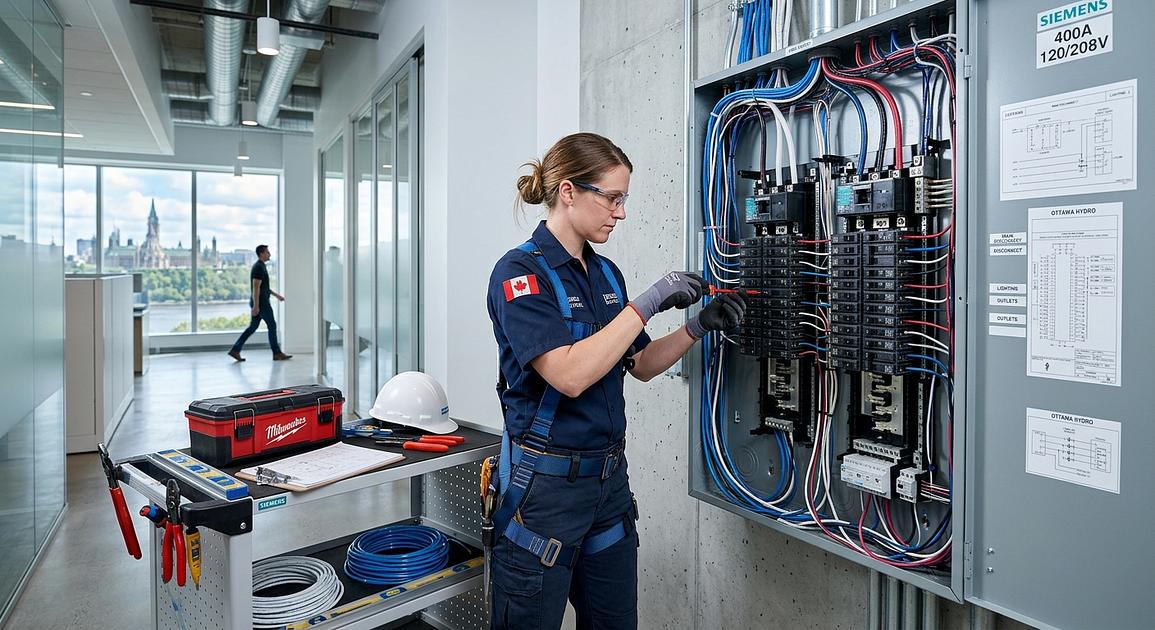
Electrician Jobs Ottawa: Hiring Guide & Career Paths 2026
Electricians are among the most in-demand skilled trades professionals in Ottawa. With the city's rapid growth, green energy transition, and smart home technology boom, qualified electricians enjoy excellent job security, competitive salaries, and diverse career paths.
Ottawa Electrician Job Market Overview
Ottawa's electrical sector is thriving in 2026. The combination of new residential construction in growing suburbs, commercial development in the tech corridor, and federal infrastructure upgrades has created sustained demand for licensed electricians across the National Capital Region.
Key market drivers:
- EV Charger Installations: Residential and commercial electric vehicle charging infrastructure
- Smart Home Technology: Home automation and IoT device installation
- Solar Panel Systems: Growing demand for renewable energy installations
- Data Center Construction: Kanata's tech sector expansion
- LRT & Transit Projects: Electrical systems for public transit
Types of Electrician Roles in Ottawa
Residential Electrician
Working in homes and apartments, residential electricians handle wiring, panel upgrades, lighting installations, and smart home systems. Average salary: $55,000-$75,000.
Commercial Electrician
Commercial electricians work on office buildings, retail spaces, and institutional facilities. They handle complex three-phase systems, fire alarm systems, and energy management. Average salary: $60,000-$85,000.
Industrial Electrician
Industrial electricians maintain and repair electrical systems in manufacturing plants, utilities, and heavy industry. This specialization commands $65,000-$95,000.
Construction Electrician
New construction electricians wire buildings from the ground up, reading blueprints and installing complete electrical systems. Average salary: $58,000-$82,000.
Maintenance Electrician
Maintenance electricians troubleshoot and repair existing systems in commercial and industrial settings. Average salary: $60,000-$88,000.
Salary Ranges & Benefits
| Experience Level | Hourly Rate | Annual Salary |
|---|---|---|
| Apprentice (Year 1) | $18-$22 | $37,000-$45,000 |
| Apprentice (Year 4) | $28-$34 | $58,000-$70,000 |
| Journeyperson | $33-$42 | $68,000-$87,000 |
| Master Electrician | $42-$55 | $87,000-$114,000 |
| Specialized (Industrial/High Voltage) | $45-$60 | $93,000-$125,000 |
Union electricians (IBEW Local 613) typically earn at the higher end of these ranges and receive comprehensive benefits including health insurance, pension plans, and paid training.
Apprenticeship Pathway in Ontario
Becoming a licensed electrician in Ontario requires completing a 5-year apprenticeship program:
Step 1: Find an Employer Sponsor
Register with an electrical contractor who will sponsor your apprenticeship. Many Ottawa contractors actively seek apprentices.
Step 2: Register with Skilled Trades Ontario
Complete the apprenticeship registration process and receive your training standard.
Step 3: Complete On-the-Job Training
Accumulate 9,000 hours of supervised work experience over approximately 5 years.
Step 4: Attend In-School Training
Complete three 8-week in-school sessions at an approved training delivery agent (such as Algonquin College).
Step 5: Write the Certificate of Qualification Exam
Pass the provincial exam to become a licensed 309A Construction and Maintenance Electrician.
Red Seal Certification Requirements
The Red Seal endorsement allows electricians to work across Canada without additional certification. To earn it:
- Hold a valid Ontario Certificate of Qualification (309A)
- Pass the Interprovincial Red Seal Examination
- Maintain continuing education requirements
Red Seal electricians in Ottawa can command $5-$10/hour more than non-Red Seal journeypersons.
Top Employers Hiring Electricians in Ottawa
- Hydro Ottawa: Utility company with ongoing infrastructure projects
- Myers Electric: Major Ottawa electrical contractor
- Taggart Electric: Commercial and industrial electrical services
- Capital Electric: Residential and commercial wiring
- Federal Government: Public Works and Government Services Canada
- IBEW Local 613: Union electrical contractors
Union Opportunities (IBEW Local 613)
The International Brotherhood of Electrical Workers (IBEW) Local 613 represents electrical workers in the Ottawa area. Benefits include:
- Competitive wage scales with regular increases
- Comprehensive health and dental benefits
- Pension plan (Electrical Workers' Pension Plan)
- Registered Apprenticeship Program (RAP)
- Continuing education and training
Career Advancement Paths
- Specialization: Industrial, high voltage, fire alarm, or home automation
- Supervision: Foreman → General Foreman → Project Manager
- Business Ownership: Start your own electrical contracting company
- Teaching: Become an instructor at a trades college
- Inspection: Become an Electrical Safety Authority (ESA) inspector
Job Search Strategies for Electricians
- Update Your Credentials: Ensure your Certificate of Qualification and Red Seal are current
- Build a Portfolio: Document major projects you've worked on
- Network: Attend IBEW meetings and industry events
- Use Specialized Job Boards: TradesOn.ca lists Ottawa electrical positions
- Contact Contractors Directly: Many positions are filled through direct applications
FAQ: Electrician Jobs in Ottawa
How much do electricians make in Ottawa?
Electricians in Ottawa earn between $55,000 and $95,000 annually, depending on experience and specialization. Journeypersons typically earn $68,000-$87,000, while master electricians and specialized workers can earn $95,000+.
How long does it take to become an electrician in Ontario?
Becoming a licensed electrician in Ontario takes approximately 5 years, including 9,000 hours of on-the-job training and three 8-week in-school sessions. After completing your apprenticeship, you must pass the Certificate of Qualification exam.
Is the Red Seal worth it for electricians in Ottawa?
Yes, the Red Seal endorsement is highly valuable. It allows you to work anywhere in Canada and typically commands $5-$10/hour more than non-Red Seal journeypersons. Many Ottawa employers prefer or require Red Seal certification.
What is the difference between 309A and 442A electrician licenses?
The 309A license is for Construction and Maintenance Electricians (most common), while the 442A is for Industrial Electricians. The 309A covers residential and commercial work, while the 442A focuses on industrial settings and complex machinery.
Are electricians in demand in Ottawa?
Yes, electricians are among the most in-demand trades in Ottawa. The city's construction boom, green energy transition, and retiring workforce have created significant shortages. Job prospects are excellent for the foreseeable future.
Related Resources
- Trades Jobs in Ottawa
- Ontario Apprenticeship Programs
- Construction Jobs Ottawa
- Trades Careers in Ottawa
🔍 Find Jobs Now: Browse our Trades Directory for direct links to open positions, salary guides, and career resources by trade.